We are thrilled to announce two separate $10,000 matching fund challenges to support the preservation and restoration of two historically significant rail cars in our collection. Thanks to two generous donors, every dollar you give will be matched dollar-for-dollar, up to $10,000 for these two projects!
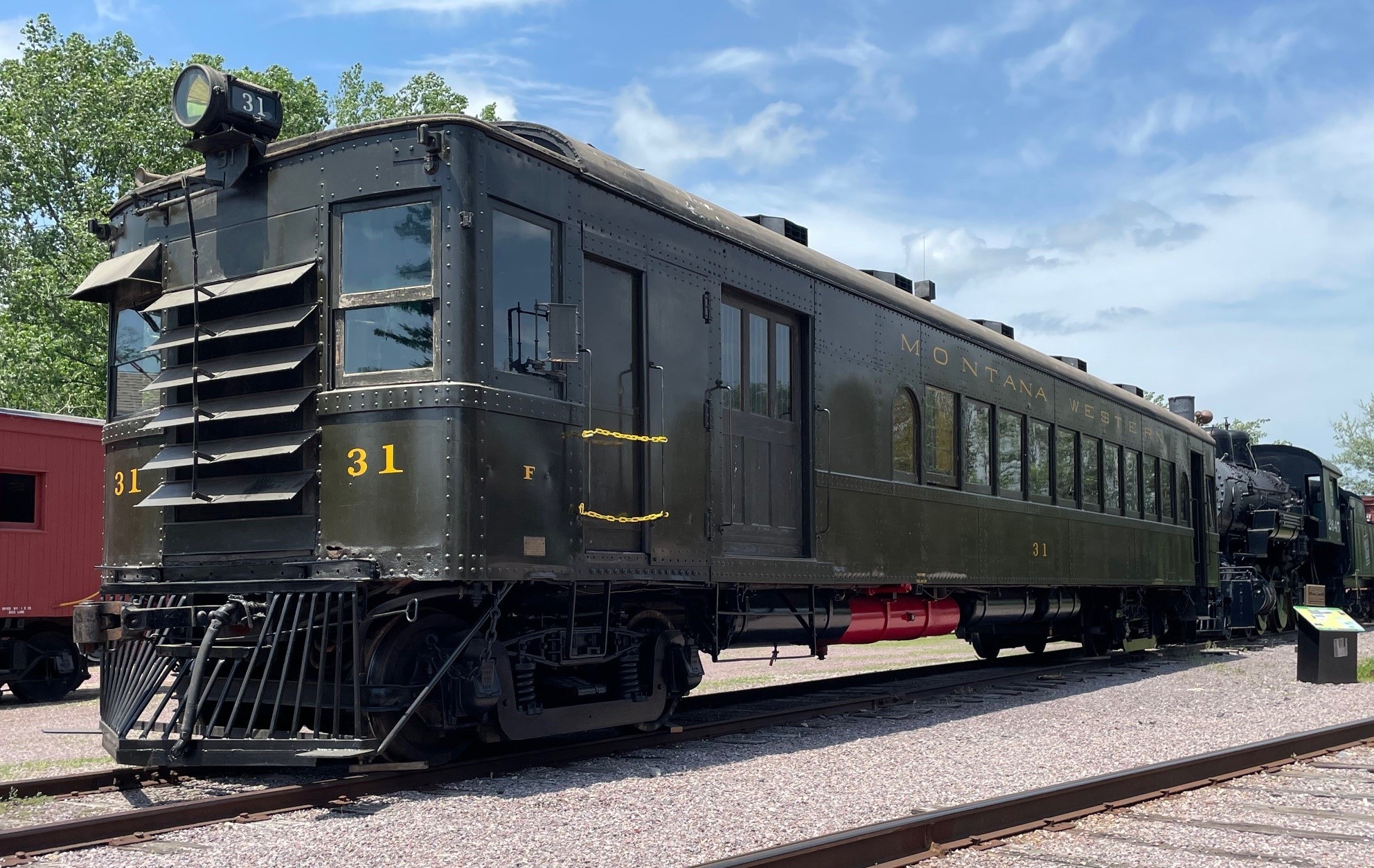
🔹 Montana Western #31 (AKA Great Northern #2313): The funds will be used to rebuild the radiator in this oldest surviving EMC gas-electric motorcar. The Montana Western #31 was the 30th unit of its kind and represented the cutting edge of technology at a time when railroads were seeking alternatives to steam service on branch lines.
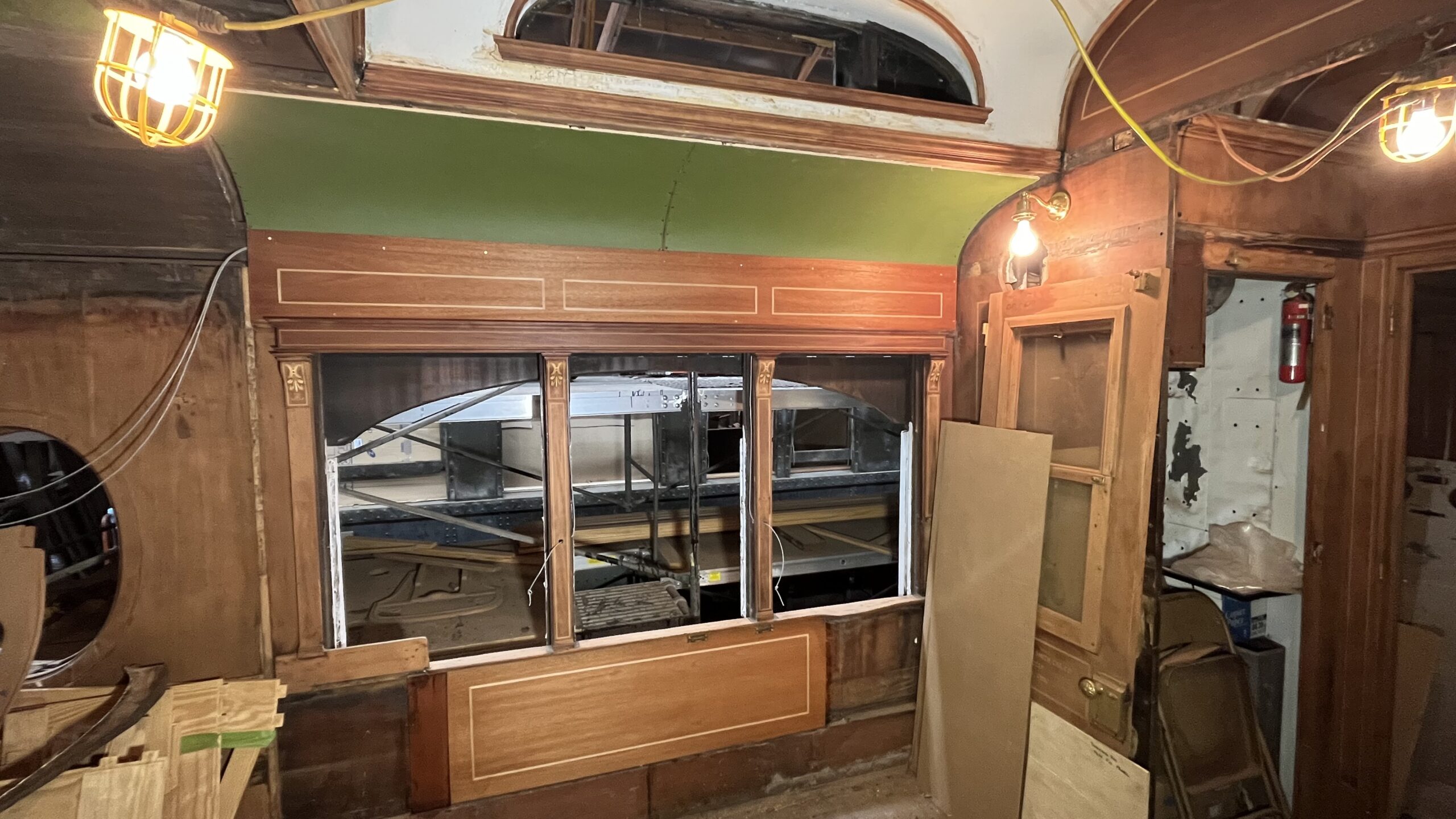
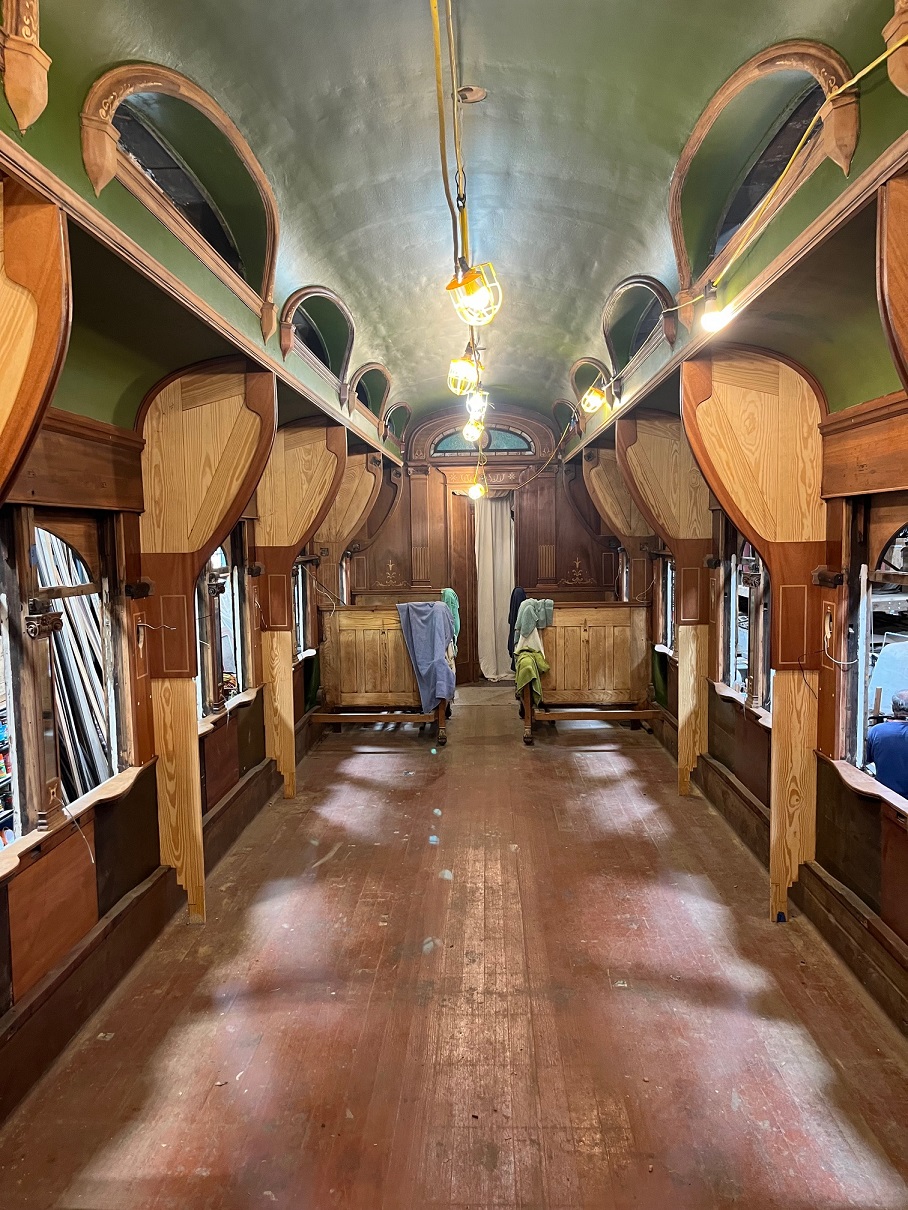
🔹 Duluth South Shore and Atlantic DULUTH Sleeper Car: This is an extremely rare example of a wooden sleeper car. The matching fund drive is targeted to provide the needed funds to replicate the original Men’s Smoking Room in the DULUTH. The Men’s Smoking Room had two sinks, a saloon (toilet) and a long sofa. This room was the area of the car where men could gather and have a smoke or wash up during their overnight trip along the Duluth South Shore & Atlantic route between Sault Ste. Marie and Duluth, MN. Drawings have already been made and with the $10,000 challenge donation and matching funds, we will be able to construct new mahogany veneer walls (with marquetry) for the smoking room.
The Men’s Smoking Room floorplan in the DULUTH.
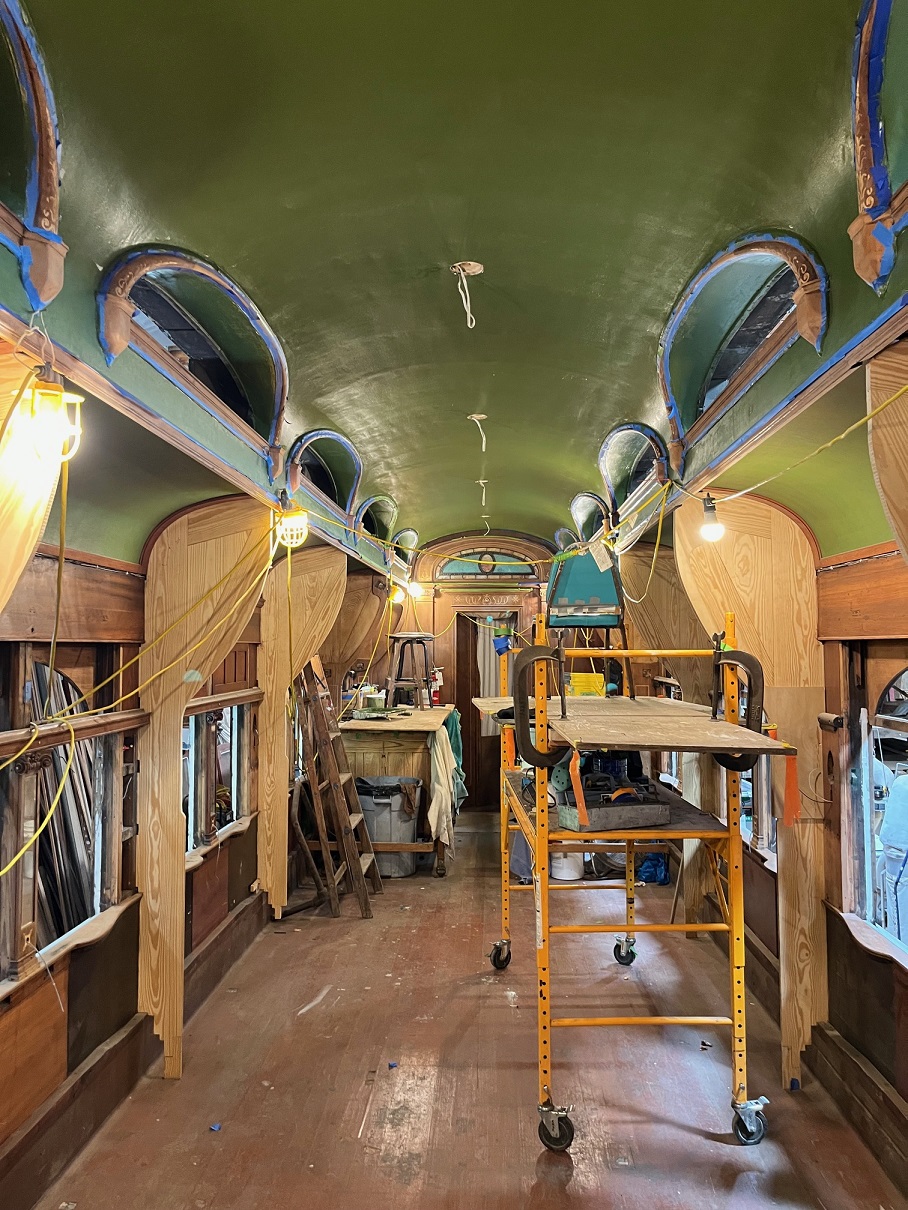
The interior of the Men’s Smoking Room as it stands currently.
Help us keep these pieces of history alive! Donate to one or both projects today using the buttons below.
The 5-day long “All Hands on Deck” session held on June 18th-22nd by the MCRM Restoration Department was a great success. The very successful and productive “All Hands on Deck” Session had a total of 32 volunteers participating in the event, with an average of 20 volunteers per day. In total the volunteers put in over 800 hours of work during this session. The volunteers really did an outstanding job and performed an immense amount of work in a matter of a few days.
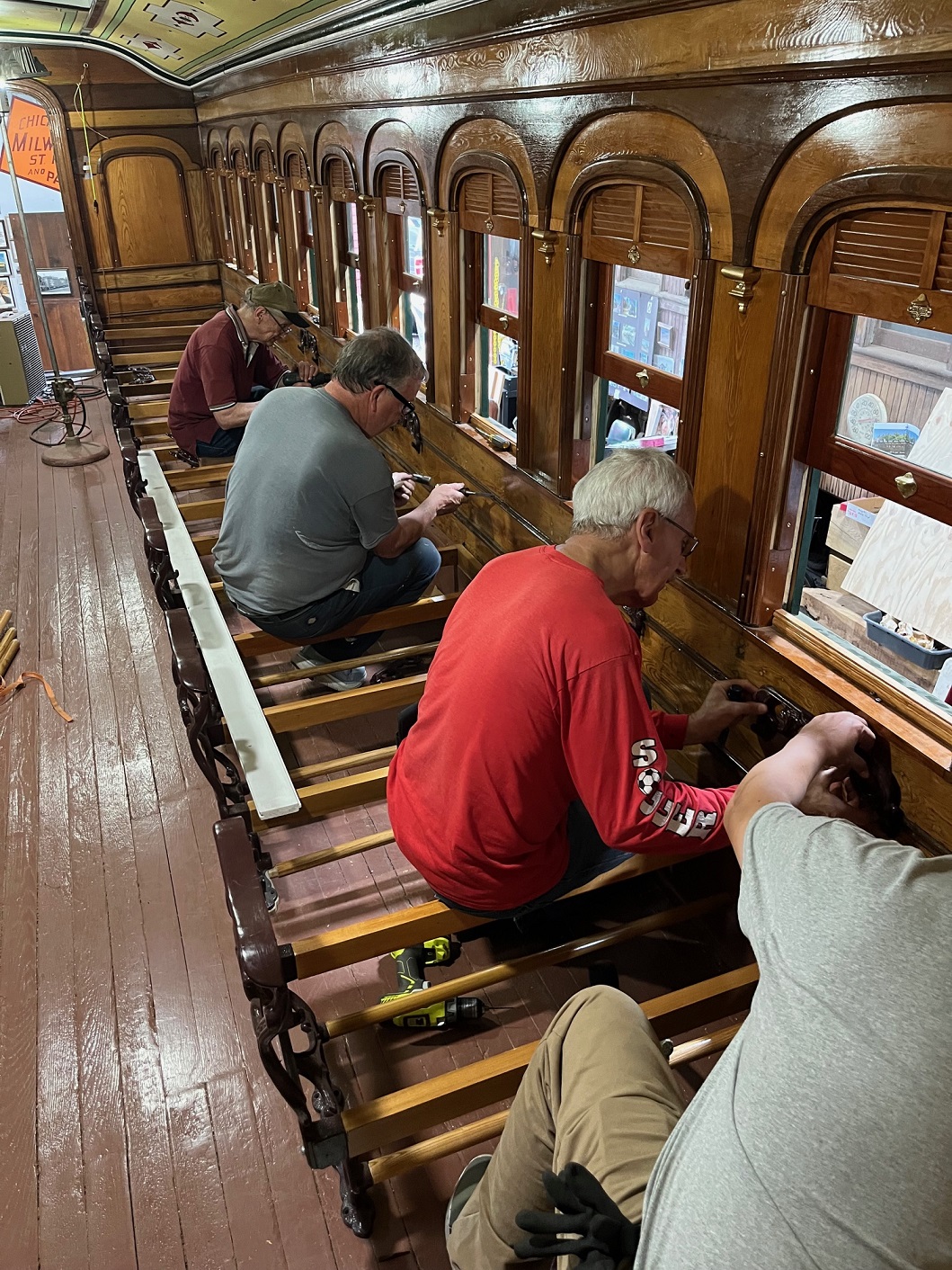
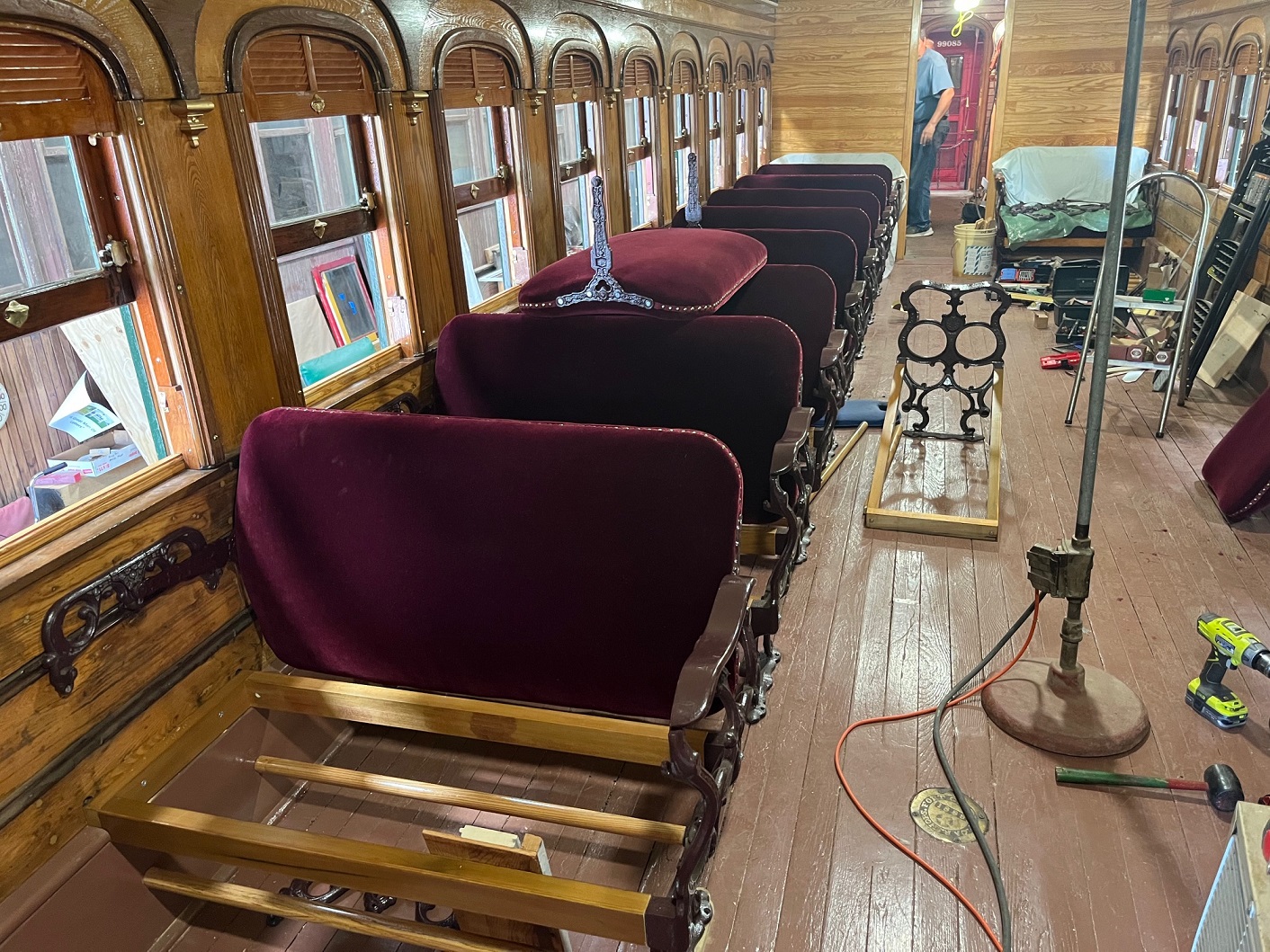
Anyone visiting the MCRM Car Shop after this event will notice a significant difference in the appearance of the cars that were worked on. The progress made during this session exceeded the expectations. The progress made was achieved due to the support, commitment and hard work of the volunteers. Progress made during the 5-day All Hands on Deck Session is summarized below. Note that several of the photos capture the status of the projects before and after the All Hands on Deck session. East Jordan & Southern Combine #2: The volunteer crew of Pete, Jeff Hu., Jeff A., Jeff Ha and Dean S. assembled and installed the Buntin seat frames, seat back and seat bottoms for the seats in the passenger section. This included boring the holes in the truss plank for the foot rests and installing the arm rests on the aisle castings. The crew also installed the second overhead oil lamp in the passenger section as well as the oil bracket lamp adjacent to the saloon. With work wrapping up in the passenger section additional work was performed in the baggage compartment.
BEFORE: The EJ&S #2 as Dean S., Jeff Hu and Jeff A. work on installing brackets on the ends of the seat backs.
Pete, Jeff A. and Jeff Hu installing the seat brackets on the east side of the car.
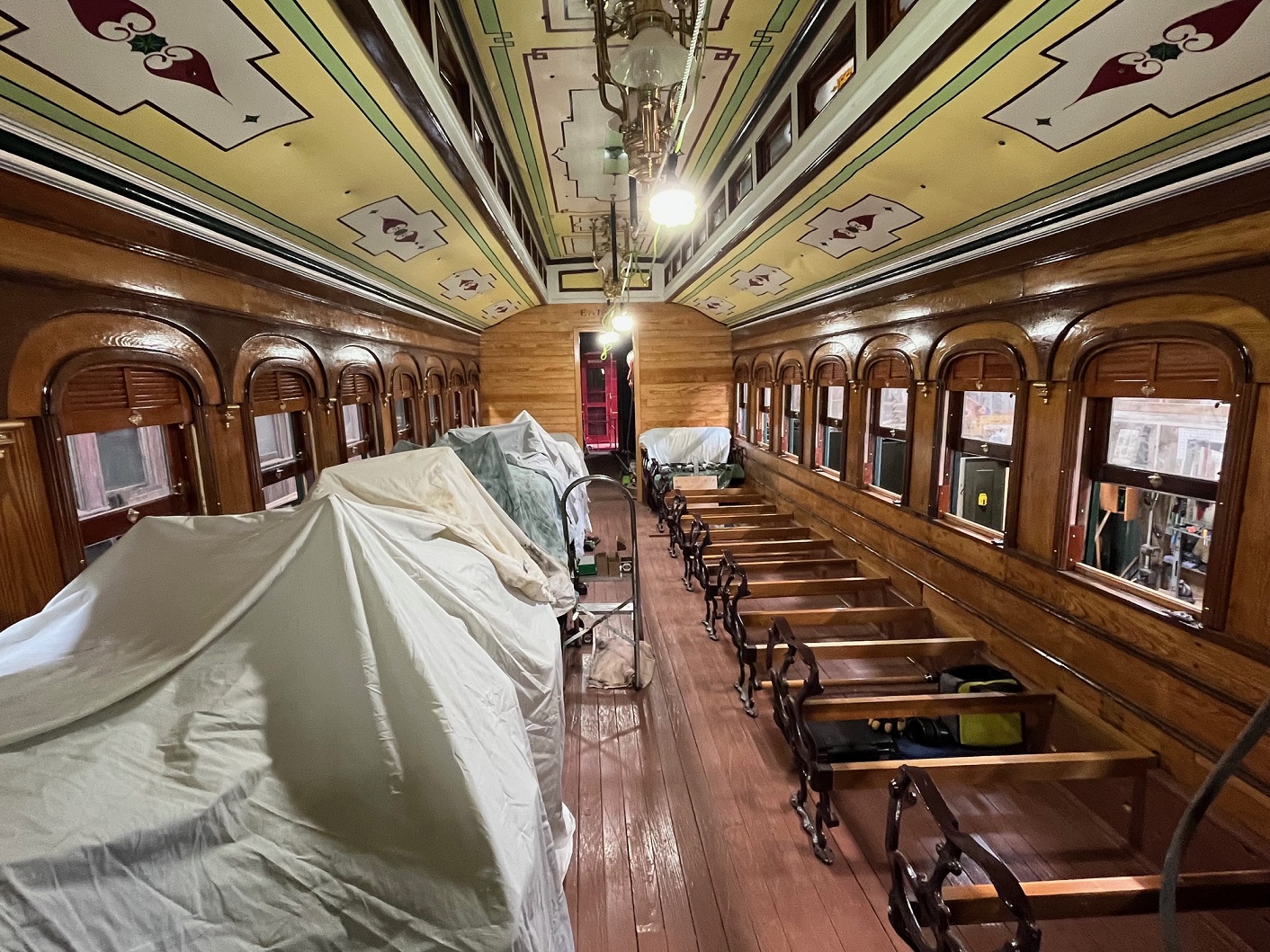
The new seats and cushions installed on the east side of the car.
AFTER: The EJ&S after three days of work to install the new seats. The newly installed seats on the left are covered with sheets.
Duluth South Shore & Atlantic Sleeping car DULUTH: The volunteer crew of Karl, Bob B., Ron, John, Dean V., Nate, Andrew, Tom, Jack, Jerry F. and Bill worked on the DULUTH during the AHOD session. During the session we took delivery of six new berth tables, six folding window screen frames, the sleeping compartment window panels and trim pieces for the smoking room. Work performed included installing trim pieces, headliner battens and a window bottom rail in the smoking room. In the sleeping compartment the new window post panels were trimmed, fit and installed along with the berth partition overlay pieces. The accomplishments in the sleeping compartment are significant as they will allow us to move on to installing the heating pipes and lower berths.
On the exterior of the car over 15 feet of the car received new car siding on the area below the windowsill. Another significant accomplishment was the installation of the new 8-piece windowsill for the east side. Each piece of the windowsill was doweled and screwed together to make for a one-piece sill 65 feet in length. Once assembled the windowsill was lifted into place with the help of ten volunteers evenly spread out across the length of the sill. Once in place the windowsill was screwed in place and the screw holes were plugged.
BEFORE: The sleeping compartment prior to the AHOD.
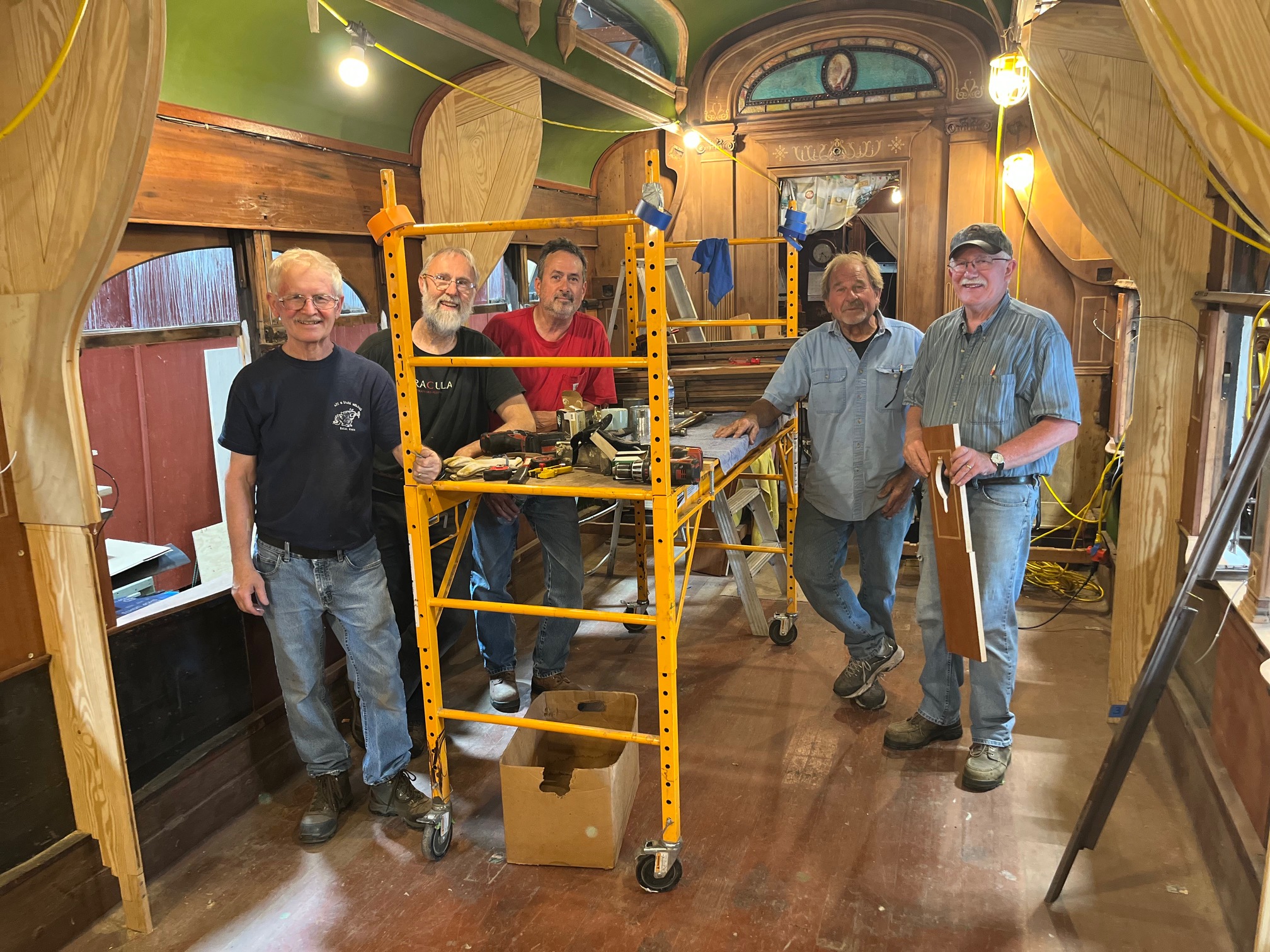
Part of the crew in the DULUTH. Dean V., Ron, Steve, Bob and Karl.
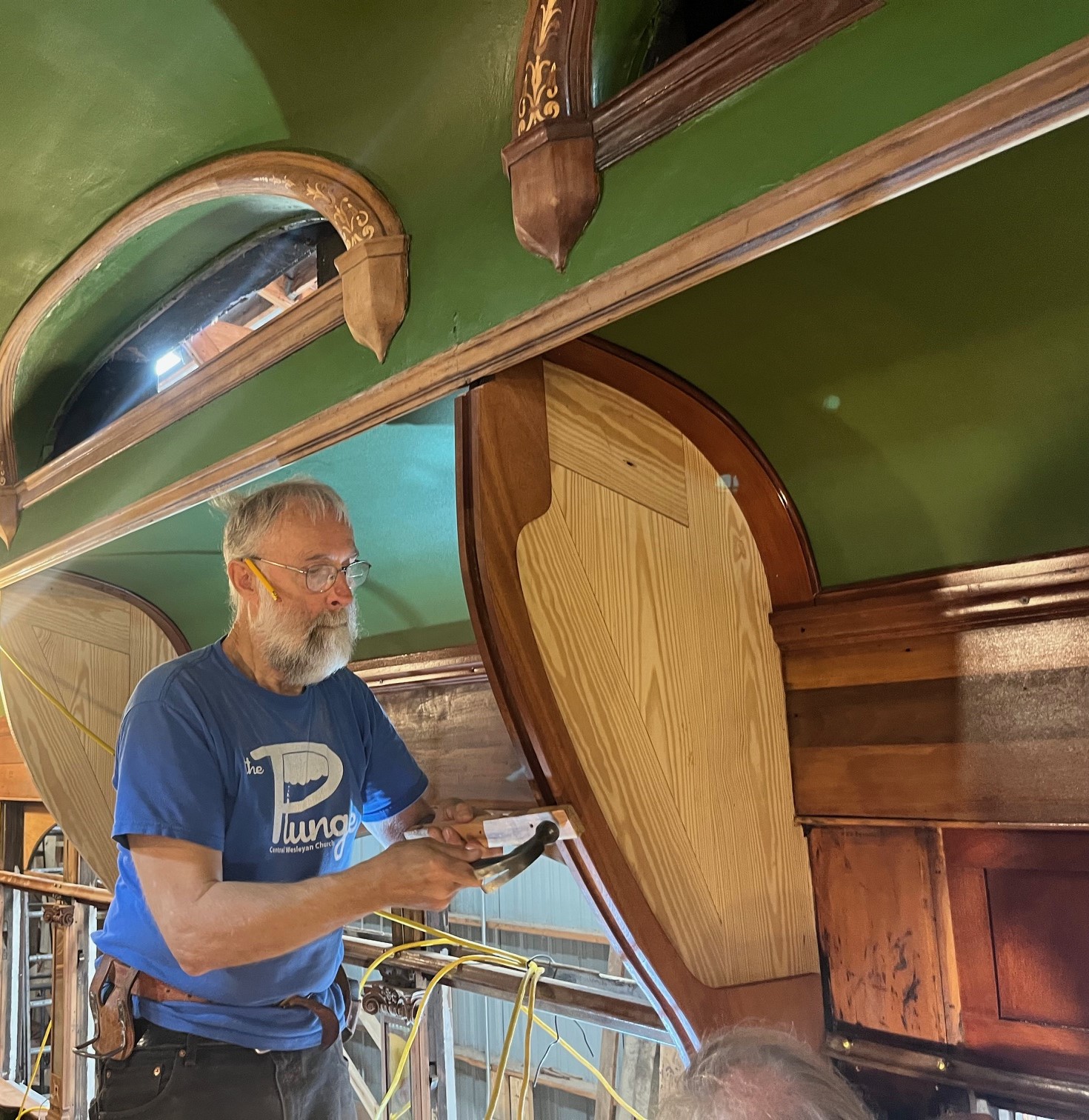
Ron in the process of install one of the berth partitions.
AFTER: The sleeping compartment after the AHOD.
Karl and John installing new lower siding on the DULUTH.
Volunteers in the process of installing the one-piece windowsill into place on the DULUTH.
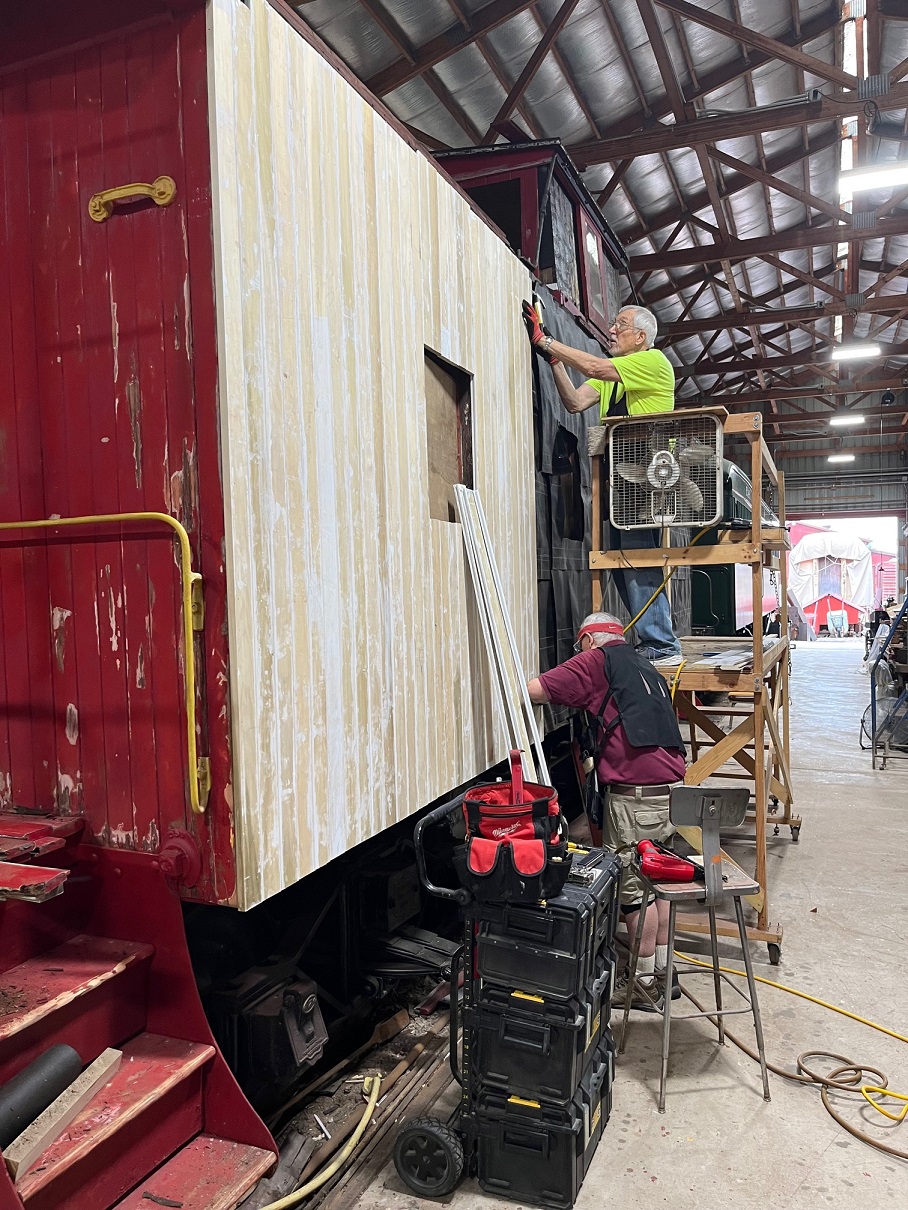
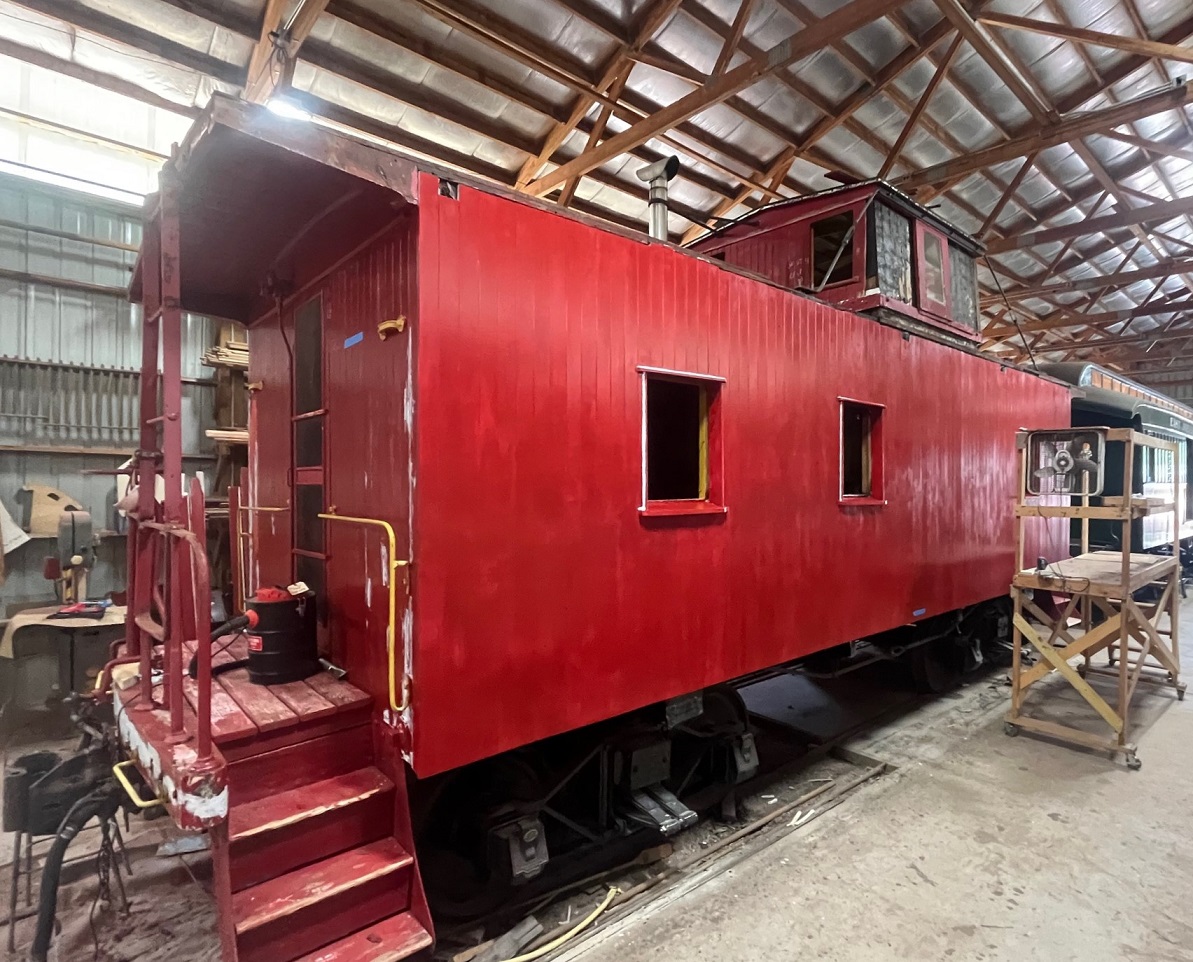
Soo Line Caboose #99085: The volunteer crew of Richard P., Larry S., Bob R., David P., Dean S., Dean V., Jeff Hu., Altha, Jack, Jerry F., Gregg, Jane and Bill worked on the caboose during the AHOD session. Work performed included installing the new car siding on the east side of the car and framing out all four of the windows on the car. On the west side of the car new siding was installed around SW window and the bottom six inches of a number of boards were cut off and replaced. Epoxy repairs were made as needed on the car sides and the end beams. The entire car body was sanded, and all bare wood was primed. With the exception of a few areas awaiting further repairs, the entire car received two coats of the caboose red.
The new window frames for the car body and cupola were primed and given two coats of finish color. New wood roof drip edge pieces were made and are waiting to be installed along with the new rubber roof.
BEFORE: Jack and Jerry installing the new car siding on the east side of the caboose.
Work in process on the west side of the caboose.
AFTER: The caboose after five days of work.
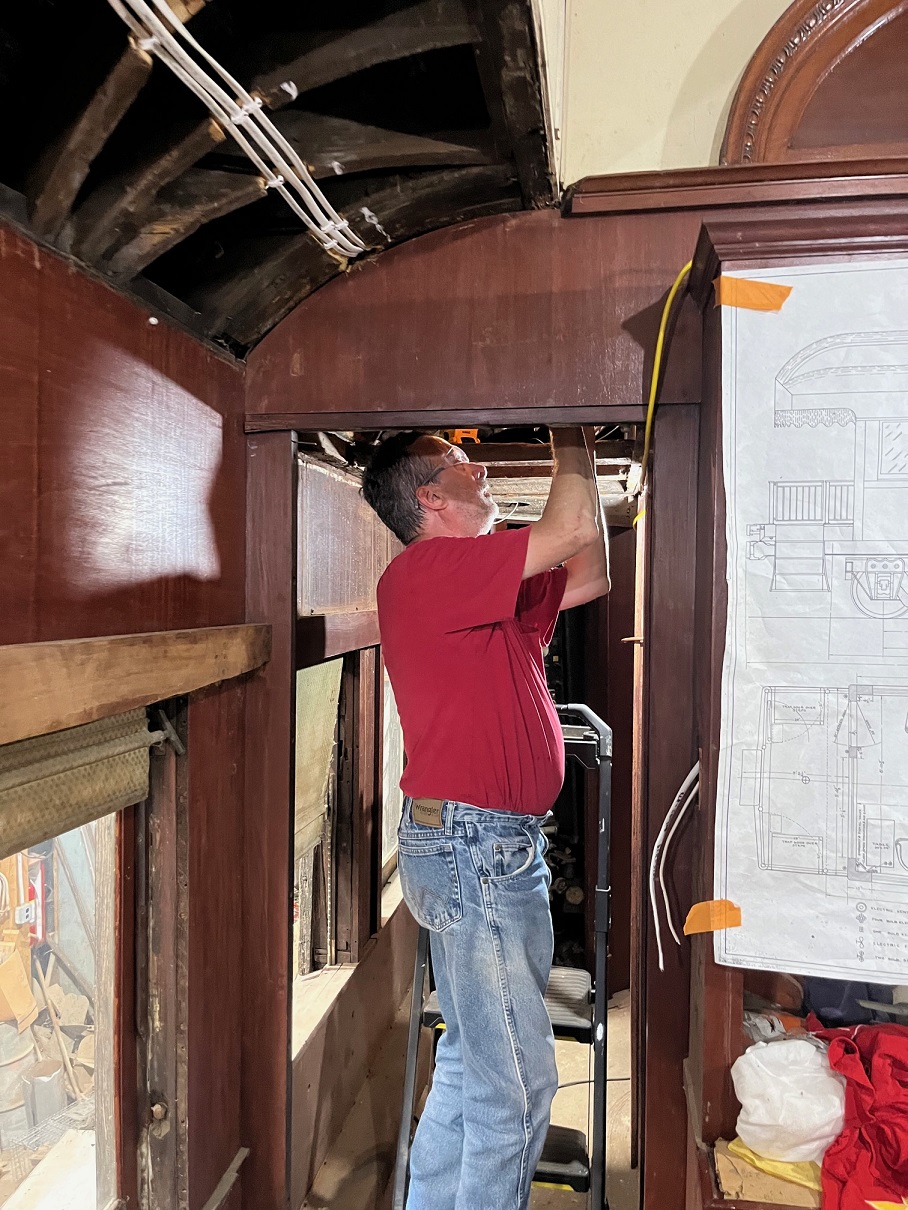
Chicago & Illinois Midland Business Car #90: The volunteer crew of Steve, Dean V. and Jerry M. worked on the C&IM #90 business car. Work continued to route and install new wiring for the light fixtures in the south end of the car. The light in the toilet room has been energized and shortly power to the south entranceway and rear vestibule will be completed. In the south stateroom good progress was made with replicating the wardrobe. Final fitting of the door to the door frame was performed and the material for the wardrobe side and bottom were cut to size. All pieces of the wardrobe were sanded and the interior surfaces were sealed and stained.
Steve working on the wiring inside the C&IM #90.
Jerry M. and Dean V. staining the side panel for the wardrobe in the C&IM #90.
Rock Island Combine #1094: Fred B. And David M. braved the sun and heat to work on needle scaling the east side of the car. The process has them getting down to bare metal and removing all of the rust. Good progress was made as over 60% of the east side of the car has been needle scaled, wire brushed and primed.
Fred and Dave M. working on the CR&IP #1094.
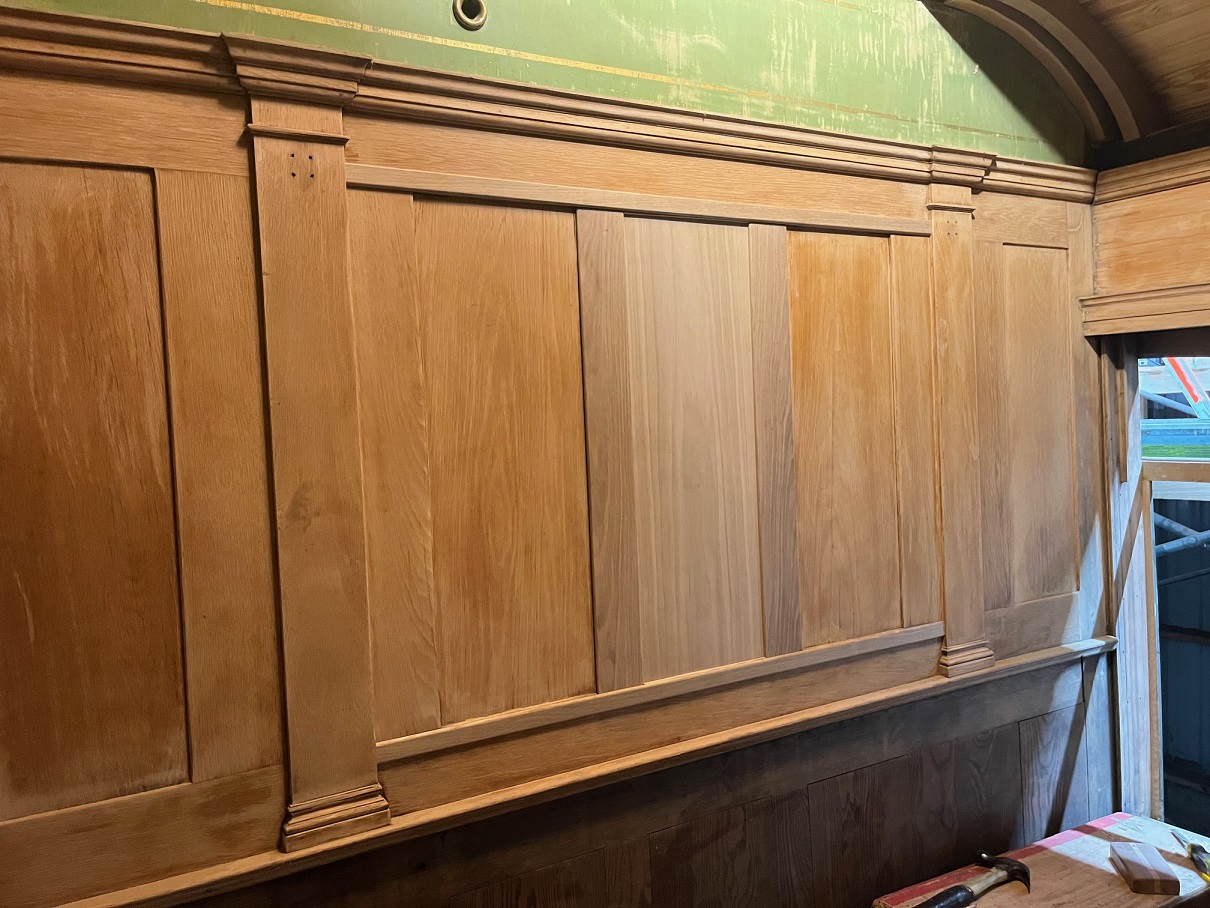
Lake Superior & Ishpeming coach #64: Bob and Larry worked inside the #64 coach. Two new end doors were received as well as a new panel for the smoking room wall. The wood panel for the smoking room was installed while the end doors wait to be fitted to the car. Inside the car stripping and sanding the car continued on the south end of the car.
The new middle panel in LS&I #64 smoking room.
The new oak end doors for the LS&I #64.
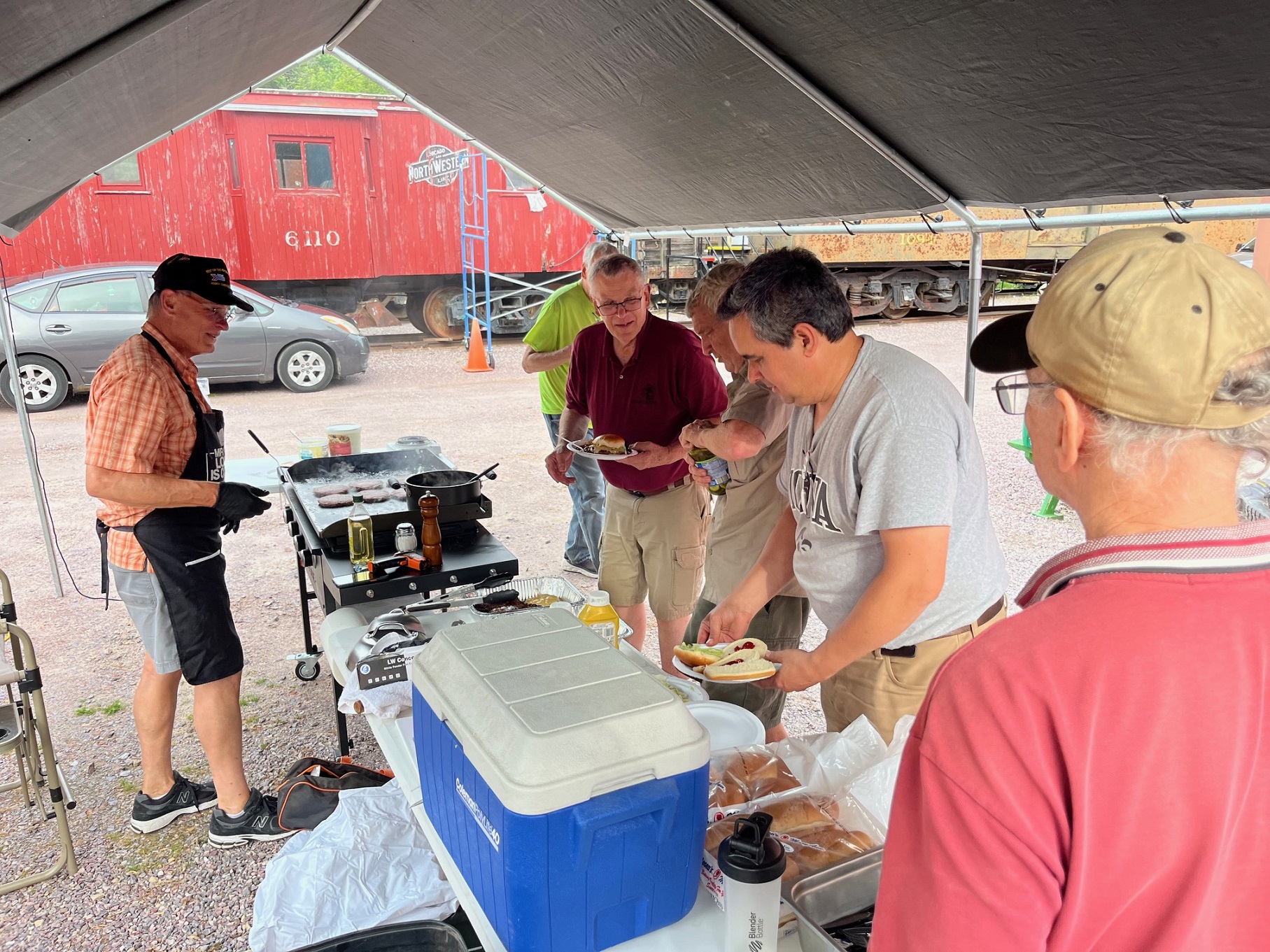
“I’d like to thank all of the amazing volunteers who put in a tremendous amount of work during the past 5 days! Your collective efforts were amazing and a real morale booster to the restoration efforts at Mid-Continent. I’d also like to extend a special thanks to the volunteers that prepared all of the meals for the entire crew during the session.” – Bill, Restoration Dept. Manager
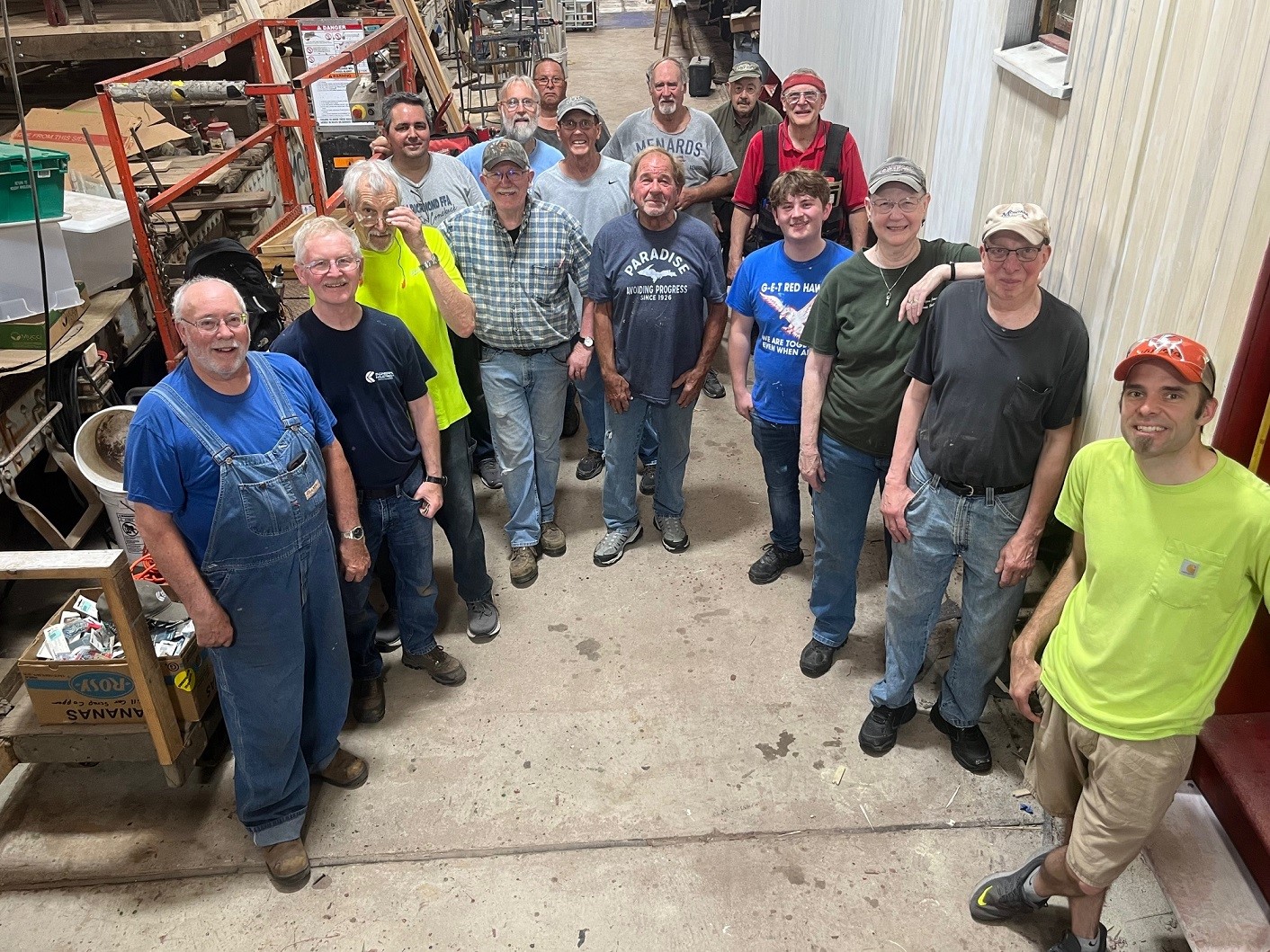
Some of the AHOD volunteers that were on hand during the session.
Steve serving up lunch time for the AHOD volunteers.
“After a long winter, we are happy to report work has begun once again on the cosmetic restoration of the D&R #9. The first work session was small and generally uneventful, but with the crew consisting of Fletcher, myself, and Tyler D, we got to work, “prepping the battlefield,” so to speak, for the next big operation. One of those next big operations on the radar is lash up of the tender and locomotive. To make that happen, we located the tender pin, deck plate, and riser, and moved them to the locomotive. Next, we began double checking the moisture levels of our pilot timbers, identifying imperfections in the wood, marking them, and re-calculating our “usable” stock. Finally, we did some coordination with the museum for future moves and then we were calling it a day. Nothing too crazy for our first session of 2025, but it’s moving us in the right direction. As Tyler put it, “Progress is progress, no matter how small.” Please stay tuned for future dates of our work session and come join us if you can.”
“As I am sure you are aware, the month of June started off with cool temps and dry conditions, and is ending with hot temps and rain, SO big changes from start to finish. We are also seeing big changes with the #9 here in June.
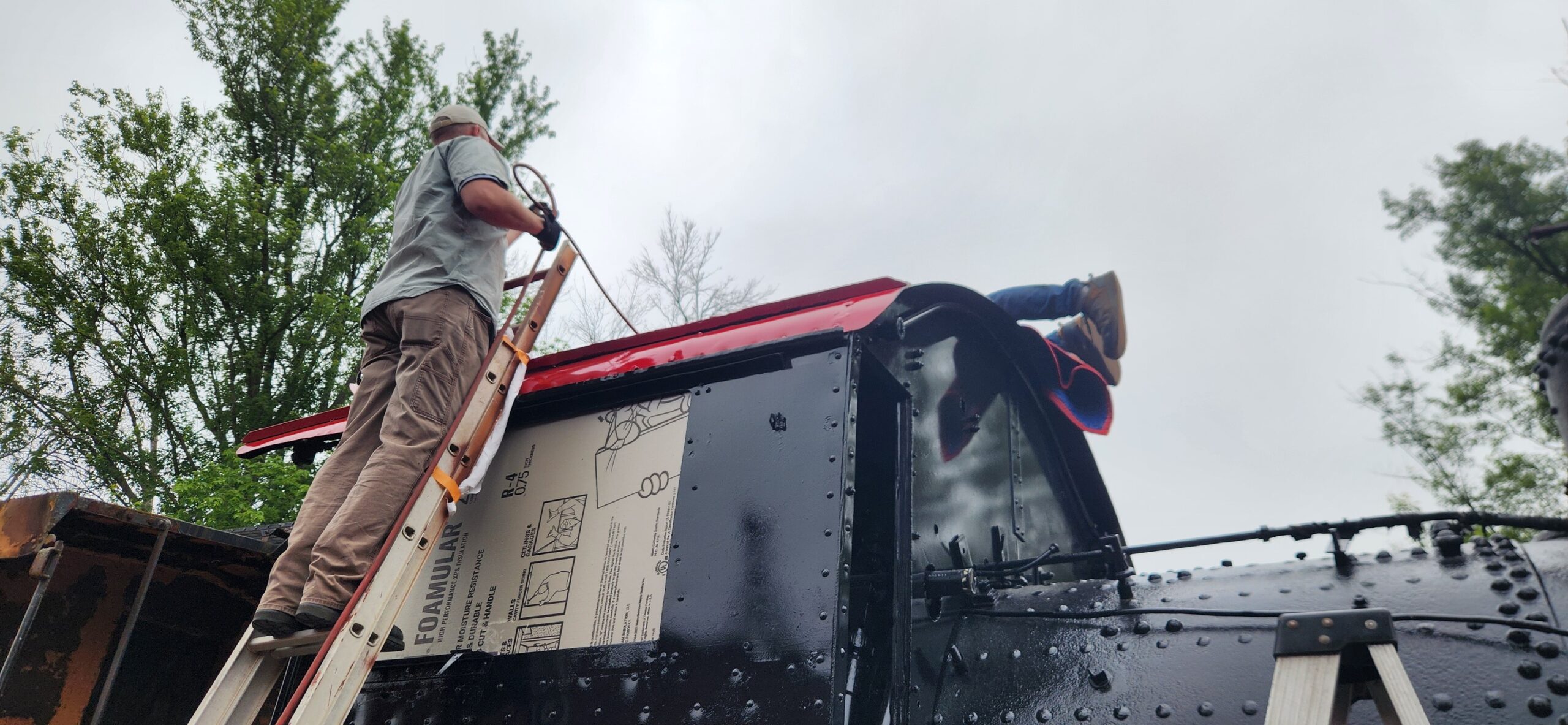
On Saturday June 14, Fletcher and Chris B. rallied at the #9 where they did a great job sealing the cab roof on the locomotive. They sealed holes, cracks, and gaps to keep rain and snow melt OUT of the Cab. For many years, moisture has been able to penetrate the roof and affect the wood and other materials inside the cab. This brings us one step closer to sealing the cab off from the elements and protecting the materials inside for restoration. Once that was completed, Fletcher and I retrieved a paint sample that Bill B. graciously provided, and we acquired the paint needed for the box seats. We were hoping to get the paint on the seats, but ran out of time, so we “kicked that can down the road”. Many thanks to Chris B. for getting this done.
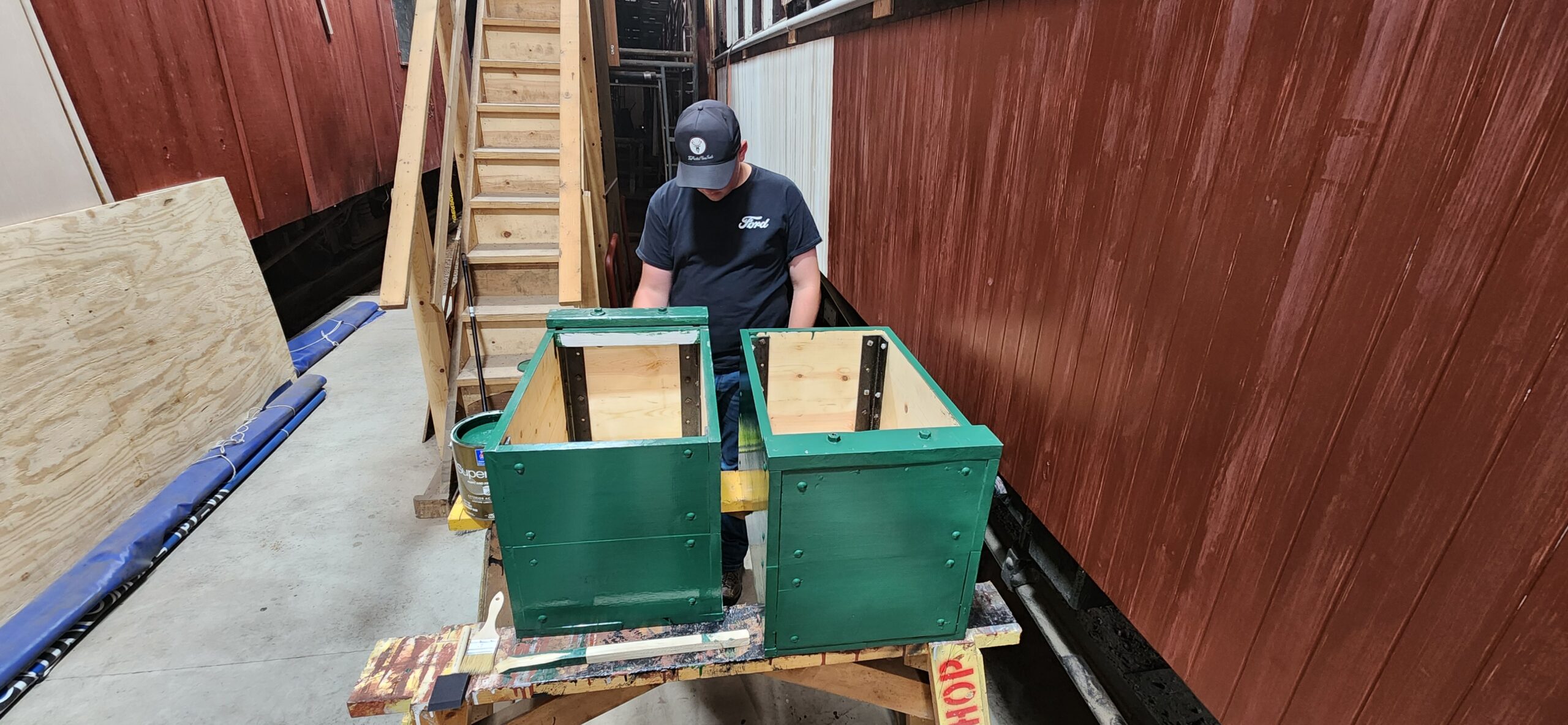
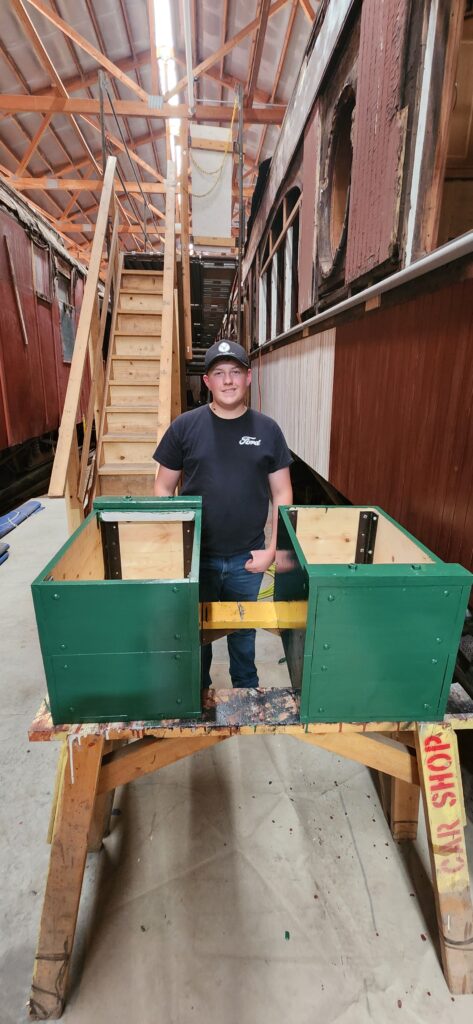
On Wednesday June 18, during the “All-Hands on Deck” work session put on by the Restoration Dept. Bill B. and Fred B. literally picked up that can Fletcher kicked down the road and applied a beautiful green coat of new paint on the locomotive seat boxes. Many thanks for Bill and Fred for helping us out. You are always welcome on the #9 crew.
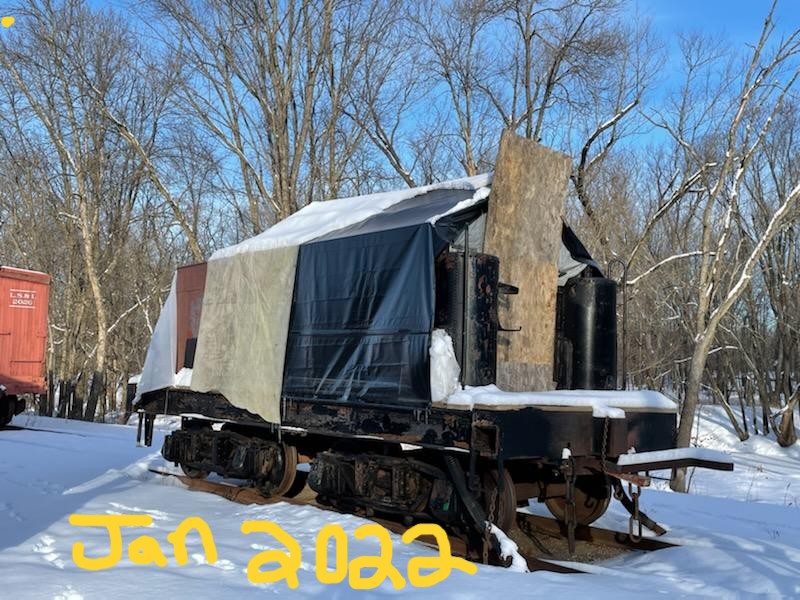
On Saturday June 21, we had one of the most exciting events since last year. Ed R. and the operations crew hooked on to the #9 and then re-united the tender and locomotive for the first time since about January of 2022. Seeing them together was such a jolting reminder of where we were, what we have accomplished, and what we still have left to do. June sure was a successful month for the #9. Fletch and I hope the remainder of the summer is just as productive for both the #9 and the rest of the museum.”
-Fletch and Jason R.
If you would like to donate toward this project, please consider making a donation via the button below.
“Fletcher’s crew was not able to coordinate a work session in July, but we pulled a small one together here at the beginning of August.
This last Saturday, Fletcher, Steve P., and I met for a quick huddle at the #9’s old location at the end of the car shop. It was an odd site to all of us not seeing our half-painted locomotive where it had sat for the last 5+ years. Once a good plan was devised, we headed out to the car shop where Fletcher was able to apply the last coat of paint on the locomotive seat boxes.
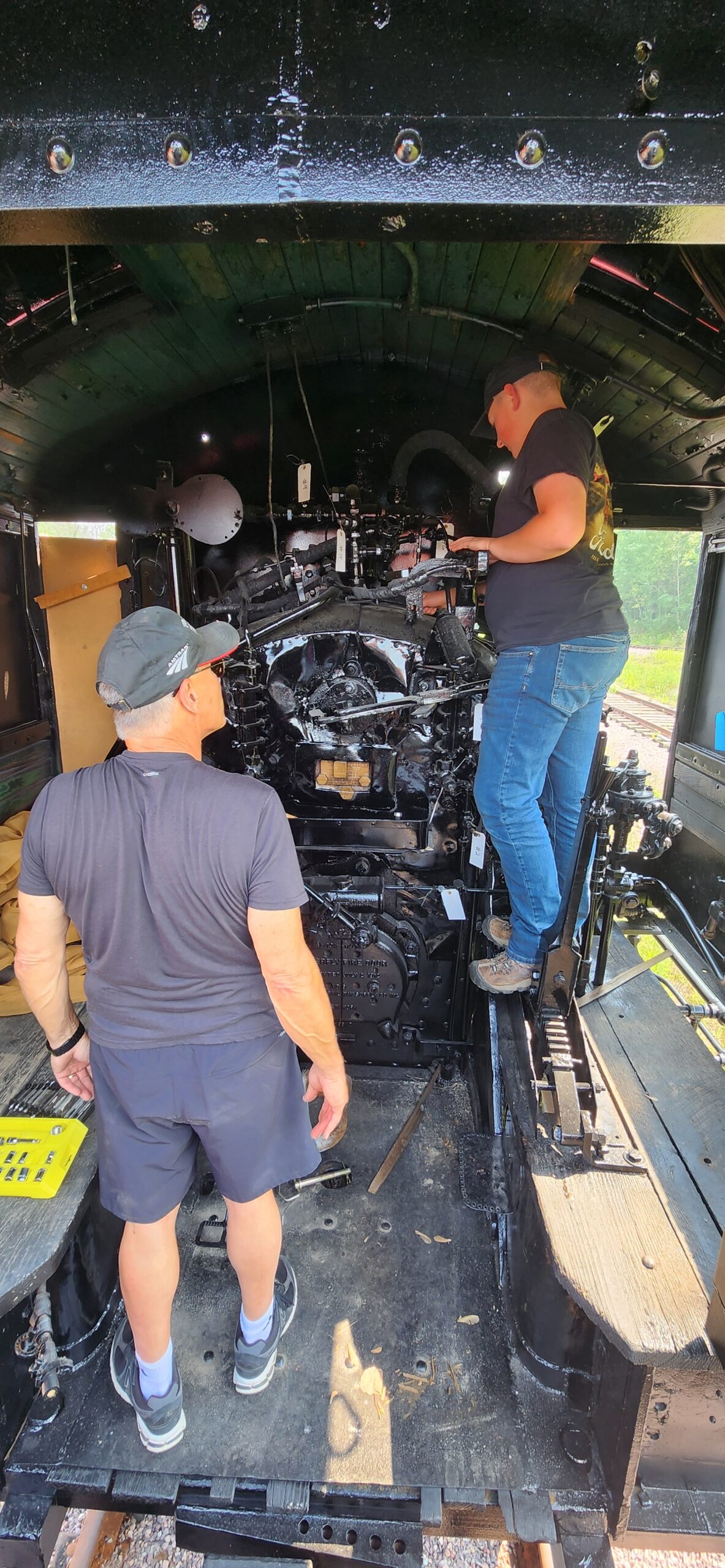
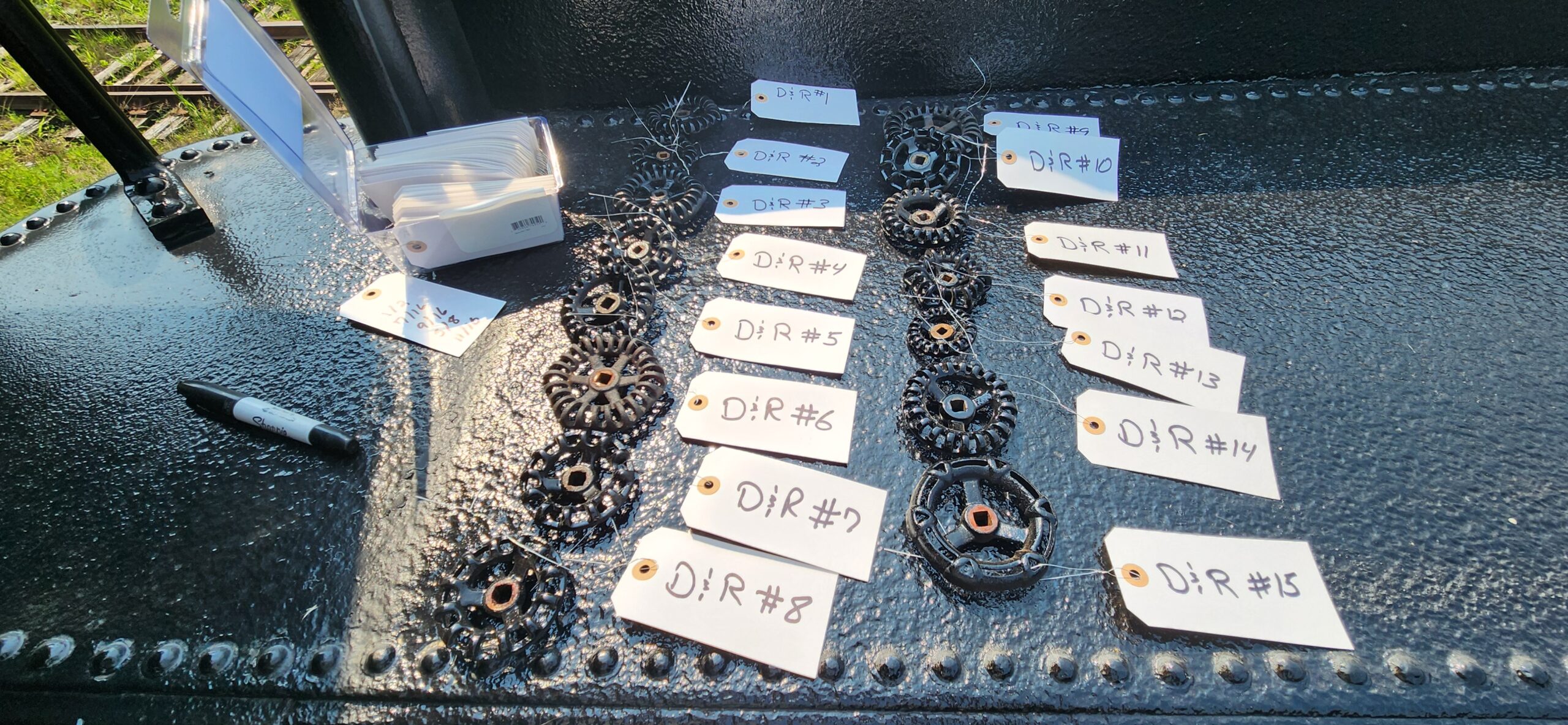
As the seat boxes were drying, we headed over to the #9’s new location, with the tender AND locomotive back together again. There we climbed into the cab where Fletch and Steve removed all the gate valves we could access. We meticulously and deliberately marked all valves for accurate replacement in the future. Our hope now is to get these painted and back in the cab in the coming months.
As we stood in the cab working on those valves, the 3:00 PM train rolled by loaded with riders on its way out of the museum. As usual, I stopped what I was doing to offer a friendly wave to those railroad lovers, young and old. My heart was full when I noticed one rider catch the attention of her son, or maybe grandson, as she frantically swung her arm around him to point out the #9 as they passed by. It was easy to see she wanted to make sure he noticed before it was too late. With her arm stretched out pointing directly at us, I hoped the drastic difference between the clean tender and shiny cab was a sight to see when compared to the rusty and bare boiler. In my mind, it was a good reminder of where we were, and how far we have come.
As we wrap up this August work session, I want to remind all we still have a long way to go on the cosmetic restoration of the D&R #9. But with your help, we can continue making her a piece that always turns heads in both adults and kids that visit Mid-Continent. Please consider donating to the #9 restoration fund via the button below.
Contains information related to marketing campaigns of the user. These are shared with Google AdWords / Google Ads when the Google Ads and Google Analytics accounts are linked together.
90 days
__utma
ID used to identify users and sessions
2 years after last activity
__utmt
Used to monitor number of Google Analytics server requests
10 minutes
__utmb
Used to distinguish new sessions and visits. This cookie is set when the GA.js javascript library is loaded and there is no existing __utmb cookie. The cookie is updated every time data is sent to the Google Analytics server.
30 minutes after last activity
__utmc
Used only with old Urchin versions of Google Analytics and not with GA.js. Was used to distinguish between new sessions and visits at the end of a session.
End of session (browser)
__utmz
Contains information about the traffic source or campaign that directed user to the website. The cookie is set when the GA.js javascript is loaded and updated when data is sent to the Google Anaytics server
6 months after last activity
__utmv
Contains custom information set by the web developer via the _setCustomVar method in Google Analytics. This cookie is updated every time new data is sent to the Google Analytics server.
2 years after last activity
__utmx
Used to determine whether a user is included in an A / B or Multivariate test.
18 months
_ga
ID used to identify users
2 years
_gali
Used by Google Analytics to determine which links on a page are being clicked
30 seconds
_ga_
ID used to identify users
2 years
_gid
ID used to identify users for 24 hours after last activity
24 hours
_gat
Used to monitor number of Google Analytics server requests when using Google Tag Manager